The Jakarta Post
Please Update your browser
Your browser is out of date, and may not be compatible with our website. A list of the most popular web browsers can be found below.
Just click on the icons to get to the download page.


Popular Reads
Top Results
No results found. Please check your search term and try again
Can't find what you're looking for?
View all search results
Popular Reads
Top Results
No results found. Please check your search term and try again
Can't find what you're looking for?
View all search resultsDeath toll nears 400, rescuers search for 1,400 missing after Nepal-Tibet floods
Many of the missing are foreign tourists, including trekkers in the Himalayan nation, as well as scores of Hindu pilgrims to Tibet's sacred snow-capped Mount Kailash.
Change text size
Gift Premium Articles
to Anyone
Share the best of The Jakarta Post with friends, family, or colleagues. As a subscriber, you can gift 3 to 5 articles each month that anyone can read—no subscription needed!
 Set as preferred source
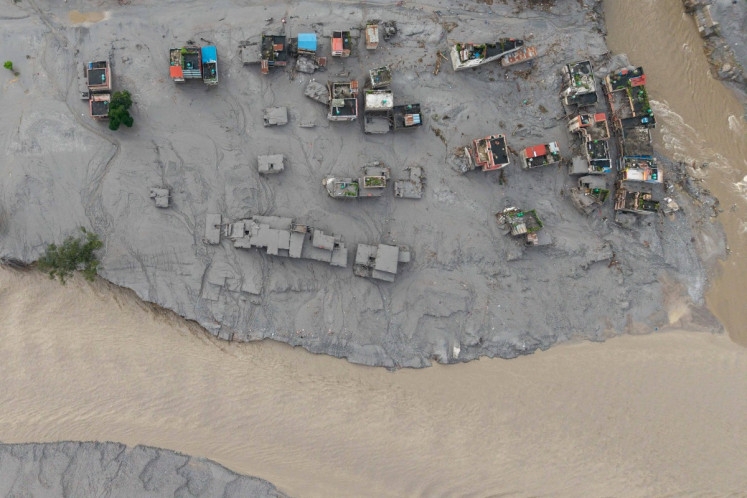
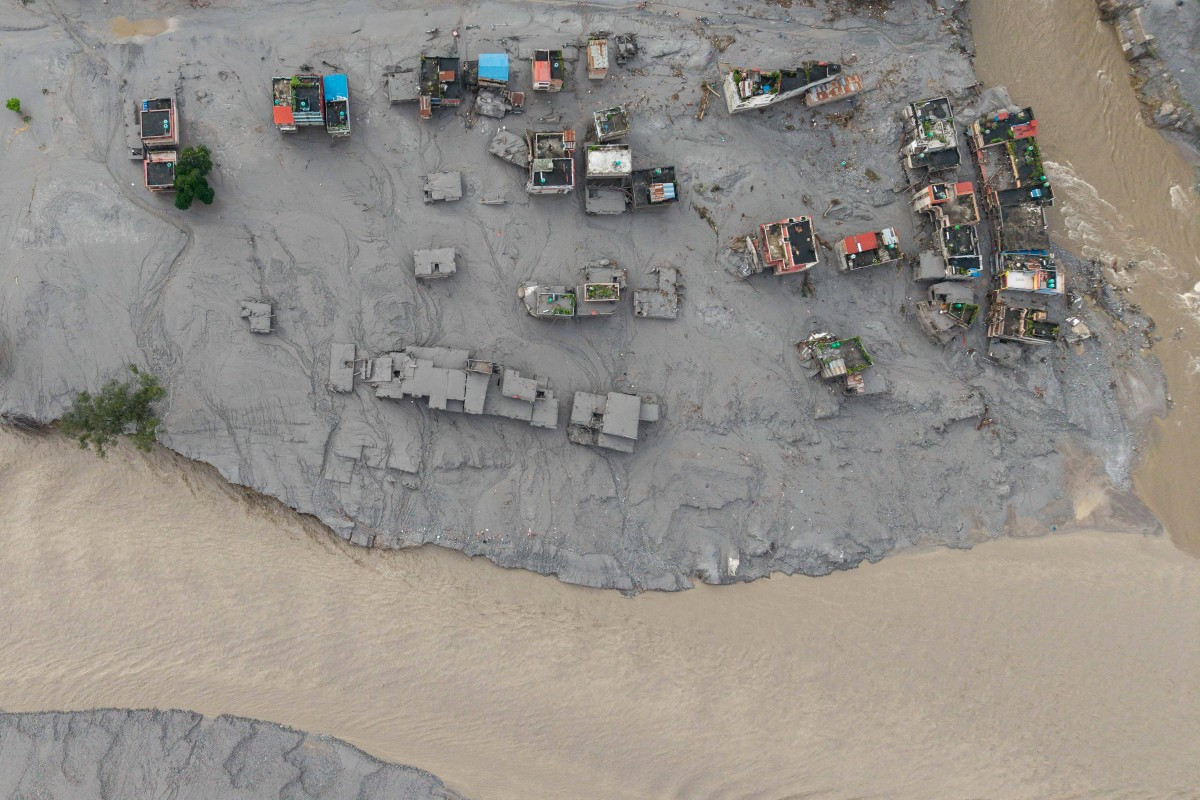 An aerial view shows houses lying deluged in sludge after flash floods at Devighat, Bidur Municipality, along the confluence of the Trishuli and Tadi rivers in Nepal's Nuwakot district on August 27, 2026. Nepal's disaster agency said that 823 people remained out of contact on August 27, more than 24 hours after a deadly flood tore through the border region with Tibet. (AFP/Prabin Ranabhat)
R
escue teams waded through mud on Thursday searching for more than 1,400 people missing after flash floods and landslides struck the Nepal-Tibet border, as the death toll rose again to 392, with entire villages swept away.
Experts warned of the risk of further floods a day after the devastating tsunami-like wall of freezing water and mud wiped out towns under a torrent of sludge, engulfing homes, smashing bridges and dams, and sweeping vehicles away like toys.
Many of the missing are foreign tourists, including trekkers in the Himalayan nation, as well as scores of Hindu pilgrims to Tibet's sacred snow-capped Mount Kailash.
The US Geological Survey (USGS) said the disaster was caused by a glacial collapse that triggered a vast flow of icy debris.
Climate change is causing glaciers to melt worldwide, increasing the risks of glacial lake floods and glacial collapses.
Emergency teams were racing to pluck survivors from affected zones, while Nepali soldiers used sniffer dogs to search for bodies buried under the suffocating dirt.
"It is a giant graveyard," Omkar Joshi, a 35-year-old Nepali customs agent rescued from a hilltop in the border town of Timure, told AFP. "All that is left are sand and pebbles, soaked red by human blood."
Nepali police said they had recovered 389 bodies.
Another 910 people, including 517 foreign tourists, were out of contact in the country. Beijing said 100 Chinese citizens -- not accounted for in that tally -- are also missing in Nepal.
Indians make up the largest number of missing foreigners, while the United States said 90 of its citizens were out of contact.
In China, state media said the "mudslide disaster" at the Gyirong Port in Tibet killed three people, while 558 people, including 260 foreigners, are missing.
Chinese Premier Li Qiang visited the area on Thursday, state media said, to oversee relief work.
China's Tibet Autonomous Region is largely inaccessible to foreign journalists.
Prime Minister Balendra Shah, who urged the nation to "stand together" hours after the disaster, toured some of the hardest-hit areas on Thursday.
Shah told local authorities to "provide immediate relief to displaced families" and to open blocked roads, his office said in a statement.
Other foreigners out of contact include citizens from Australia, Britain, Malaysia, the Netherlands, Portugal, South Africa and South Korea, Nepal's tourism board said.
The sudden rush of mud and debris was "like an inland tsunami", travelling nearly 170 kilometers south into Nepal, said environmental historian Ruth Gamble, of Australia's La Trobe University.
Buddhist spiritual leader the Dalai Lama, who lives in exile in India, said he would "pray for all those who have lost their lives".
Chinese government officials in Tibet mobilised nearly 800 emergency workers, as well as sniffer dogs and speed boats to help the rescue efforts, the official Xinhua news agency said.
Promises of aid and assistance began to trickle in soon after reports of the scale of the disaster.
The USGS said a glacial collapse caused seismic activity and had "catastrophic" downstream impacts in Nepal and Tibet.
"This event was initially reported as a magnitude 4.4 earthquake," it said, but the seismic recordings were analysed and it was found instead to be a "glacial collapse and debris flow".
Fears of more potential floods remain, with water trapped by the immense piles of debris blocking the valley.
"With a blockage still lodged upstream on the Nepal-China border river, authorities warn a second flood may occur," said Qianggong Zhang, head of climate and environmental risks at the Kathmandu-based International Centre for Integrated Mountain Development.
Kathmandu's Flood Forecasting Division issued a "special notice" on Thursday, warning of a growing lake behind debris left by the landslide and urging extreme caution.
Scores of Hindu devotees from across the world are among the hundreds missing on the border, Indian spiritual leader Sadhguru said on Thursday.
They were returning from a holy pilgrimage to Mount Kailash, on the Chinese side of the frontier, when they were caught in the floods at an immigration post.
"The entire group was there in the building," Sadhguru said in a video message to his millions of followers, weeping as he spoke from Tibet, with the anguished wails of other pilgrims heard in the background.
"This is a terrible and extraordinary event."