TheJakartaPost
Please Update your browser
Your browser is out of date, and may not be compatible with our website. A list of the most popular web browsers can be found below.
Just click on the icons to get to the download page.


Popular Reads
Top Results
No results found. Please check your search term and try again
Can't find what you're looking for?
View all search results
Popular Reads
Top Results
No results found. Please check your search term and try again
Can't find what you're looking for?
View all search resultsBangkok food vendor curbs push city staple from the streets
Change text size
Gift Premium Articles
to Anyone
Share the best of The Jakarta Post with friends, family, or colleagues. As a subscriber, you can gift 3 to 5 articles each month that anyone can read—no subscription needed!
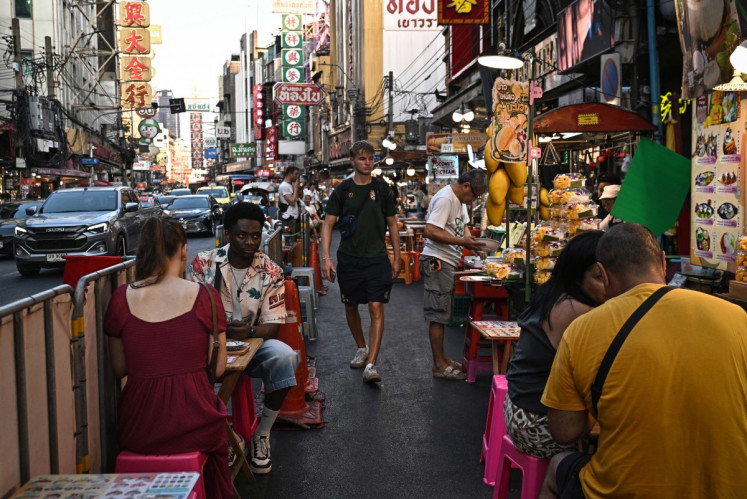
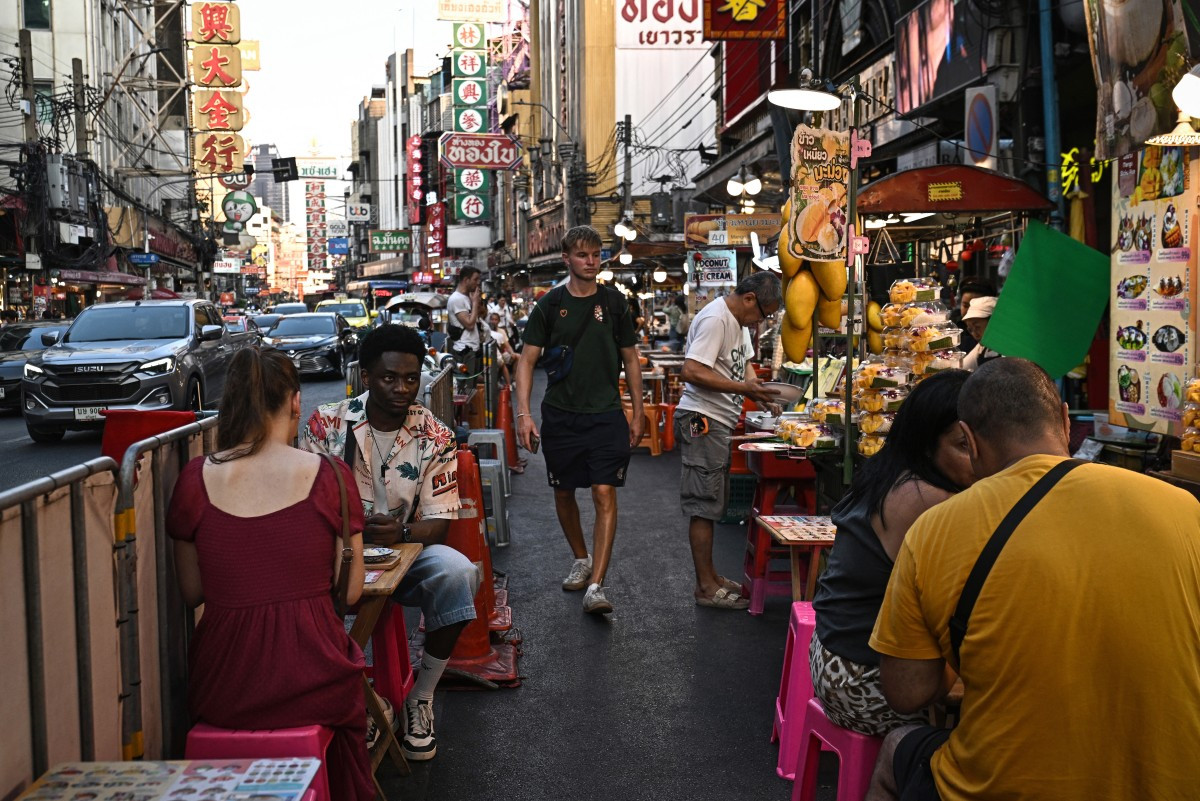 This photo taken on April 29, 2026 shows visitors eating local street food in Chinatown in Bangkok. Across Bangkok, aromas of garlic, chili and grilled meat drift from roadside stalls and carts, but tighter controls on vendors threaten livelihoods and the street food culture that defines the Thai capital. (AFP/Lillian Suwanrumpha)
A
cross Bangkok, aromas of garlic, chili and grilled meat drift from roadside stalls and carts, but tighter controls on vendors threaten livelihoods and the street food culture that defines the Thai capital.
Convenient, full of flavor and popular among locals and tourists alike, Bangkok's street food is one of the city's signatures -- where sizzling woks and smoky charcoal grills turn boulevards and sidewalks into open-air kitchens from morning until late at night.
But many street sellers in the foodie paradise face an uncertain future as the Bangkok government in recent years has moved to clear footpaths, improve order and relocate vendors from curbsides in packed commercial districts to designated market stalls.
"I am worried because we are here illegally," said Looknam Sinwirakit, who was once fined 1,000 baht [US$30] for obstructing the street while selling 50-baht fried glutinous rice cakes in the capital's Chinatown.
One of Bangkok's busiest tourist areas, the neighborhood's steady flow of customers is worth the risk of city fines, Looknam, 45, told AFP.
"Vendors need to earn a living," she said. "It's not fair just to evict us, but if they tell us to (leave) then we have to."
Nearby, durian seller Wong Jaidee, who has sold the strong-smelling fruit for more than two decades, said he also feared being made to move.
"I don't have any backup plan," the 56-year-old said. "Bangkok is a high-priced city and we may not be able to cope."
Time to move
Since 2022, the estimated number of mobile vendors in the city has fallen by more than 60 percent, with around 10,000 fewer now on the streets, according to data from the Bangkok Metropolitan Administration (BMA).
While dozens have moved to informal markets and hawker centers -- using a model similar to Singapore, where food vendors are grouped in designated locations -- many others have simply closed their business due to the stricter regulations or because they were no longer profitable, said BMA official Kunanop Lertpraiwan.
The municipality has mostly targeted vendors crowding main roads with heavy pedestrian foot traffic, while those on side streets and in areas popular with backpackers and other tourists were allowed more flexibility, Kunanop said.
"We give them time and communicate with them clearly," he said, adding some sellers were given several months to find a new location.
"It's not like we will move them tomorrow."
The city is pushing more vendors to set up shop in one of five hawker centers opened in recent years -- the latest in April beside Bangkok's popular Lumphini Park.
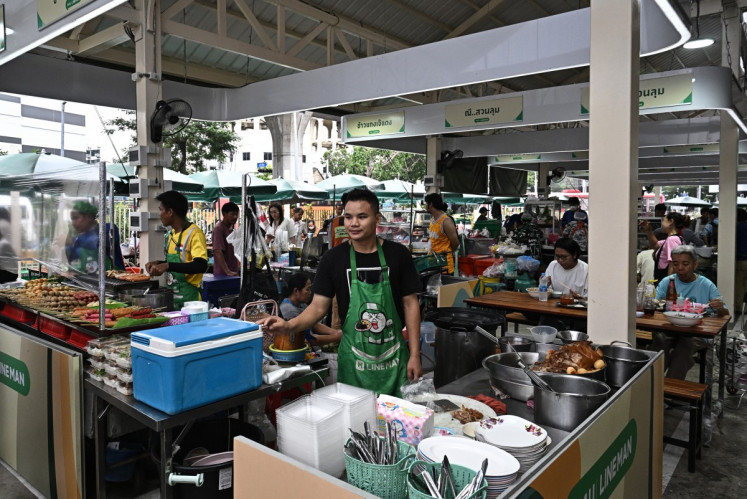
With rows of food stalls and picnic tables, the new hub so far houses around a dozen vendors who previously sold food on nearby streets.
BMA encouraged them to relocate, and they now pay 60 baht a day to rent a hawker stall.
Panissara Piyasomroj, who sold noodles to morning runners in the park since 2004, said moving into the center meant better conditions, including convenient water and electricity access.
Under a roof to beat the heat, the 59-year-old said her business had been "upgraded" and "looks cleaner".
'Part of the culture'
But for other vendors, the prospect of moving from a familiar setting remains a concern.
Thitisakulthip Sang-uamsap, 67, has sold fried vegetable balls near Chinatown for more than 40 years and worries she could be forced to relocate.
"I live around here [...] if they ask me to leave, I won't be comfortable," she said, adding she hoped the government would show empathy for older vendors earning little income.
The crowded, bustling sidewalks and the smell of freshly grilled squid and other street treats are for many visitors a key part of Bangkok's charm -- and a cheap, tasty meal on-the-go is worth the hassle of a blocked path.
German tourist Oliver Peter said Thailand has one of the best cuisines in the world, noting his favorite, Pad Thai -- the popular stir-fried rice noodles ubiquitous in Bangkok's streetside woks.
"It would be sad if they go away," he said. "It's part of the culture."