TheJakartaPost
Please Update your browser
Your browser is out of date, and may not be compatible with our website. A list of the most popular web browsers can be found below.
Just click on the icons to get to the download page.


Popular Reads
Top Results
No results found. Please check your search term and try again
Can't find what you're looking for?
View all search results
Popular Reads
Top Results
No results found. Please check your search term and try again
Can't find what you're looking for?
View all search resultsThe world must adopt an electrification roadmap
This latest global crisis further reinforces the need for cleaner, more resilient sources of energy.
Change text size
Gift Premium Articles
to Anyone
Share the best of The Jakarta Post with friends, family, or colleagues. As a subscriber, you can gift 3 to 5 articles each month that anyone can read—no subscription needed!
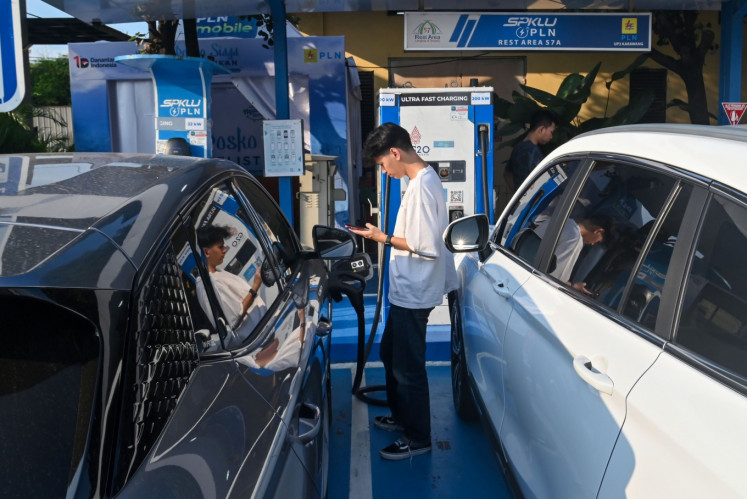
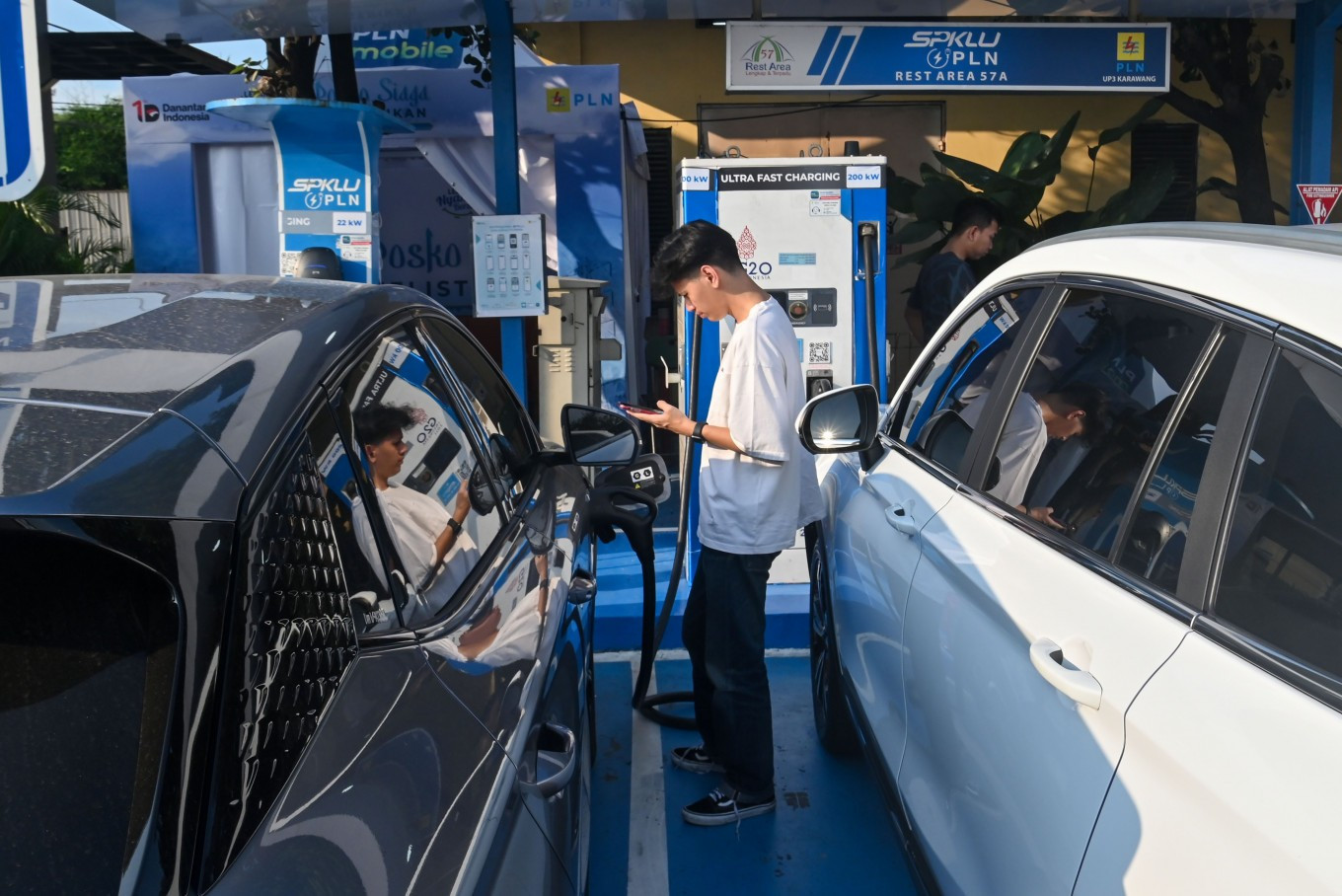 A traveler charges an electric vehicle on March 15 at a public EV charging station operated by energy giant PT PLN at a rest area on the Jakarta-Cikampek toll road in Karawang Regency, West Java. (Antara/Fakhri Hermansyah)
T
he cascade of shocks to the global economy over the past few months has offered a glimpse of our new reality. The Gulf conflict has taken an extraordinary — and dangerous — amount of oil, gas and fertilizer off the market, and now a possible “super” El Niño cycle could bring more extreme weather. That means this year’s United Nations Climate Change Conference — COP31 in Antalya, Turkey — will come just as millions of people have been pushed deeper into energy and food poverty, forced to suffer truly terrible conditions as they endure more severe natural disasters.
These perils underscore the danger of continuing to depend on imported fossil fuels. Around 80 percent of the global population lives in countries that remain net importers of fossil fuels, and we have just witnessed how vulnerable this reliance leaves our economic security. Around the world, but especially in developing countries, the prices of essentials have spiked, financial conditions have deteriorated, and debt distress has spread.
This latest global crisis further reinforces the need for cleaner, more resilient sources of energy. Three years ago, at COP28 in Dubai, governments agreed that a just, orderly, equitable transition away from fossil fuels is a top priority. Now, we must come up with a roadmap to turn that high-level vision into a day-to-day reality.
To that end, my goal as president-designate of COP31 is to spark a global conversation about electrification. We must move from abstract debates to address the real decisions that ordinary people face. Think of the family considering whether to buy an electric car; the landlord installing solar panels, batteries or heat pumps; the city planner investing in electric buses; or the paper producer electrifying its heating process.
This topic is critical, because while 45 percent of global direct emissions come from buildings, transportation, and industry, only around 20 percent of energy demand is met by electricity rather than direct fossil fuels. Thus, one of our core objectives at COP31 will be to forge an agreement on how everyone can contribute to a new global electrification target of 35 percent by 2035, and 50 percent by 2050.
These targets are not pulled out of thin air. The data show that they can be reached if policymakers heed the assessments by the International Energy Agency and the International Renewable Energy Agency of the steps needed to limit global warming to 1.5° Celsius above pre-industrial levels, as set out in the Paris agreement. That overarching ambition is now over a decade old, and this new target is an important steppingstone.

But simply electrifying daily life is not enough. We also must rapidly scale up renewables, so that electrified economies are powered by clean energy. We need expanded and resilient grids to manage the new load. And we need more financial support for developing countries to bring them along.