TheJakartaPost
Please Update your browser
Your browser is out of date, and may not be compatible with our website. A list of the most popular web browsers can be found below.
Just click on the icons to get to the download page.


Popular Reads
Top Results
No results found. Please check your search term and try again
Can't find what you're looking for?
View all search results
Popular Reads
Top Results
No results found. Please check your search term and try again
Can't find what you're looking for?
View all search resultsAnalysis: P2SK revision rekindles debate over BI, Patriot bonds
Change text size
Gift Premium Articles
to Anyone
Share the best of The Jakarta Post with friends, family, or colleagues. As a subscriber, you can gift 3 to 5 articles each month that anyone can read—no subscription needed!
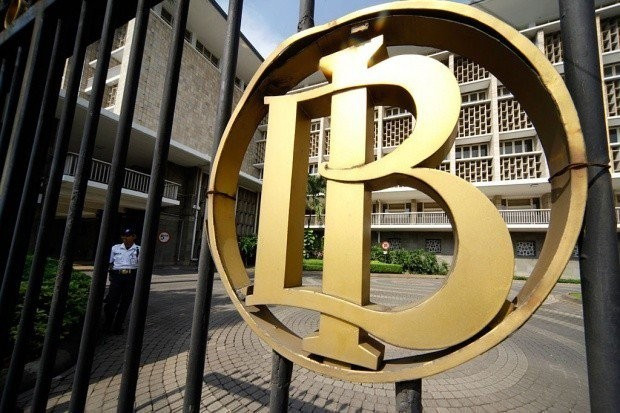 The Bank Indonesia logo adorns the gate of the central bank's headquarters in Jakarta in this undated photograph. (Antara/File)
T
he House of Representatives has approved the Bill on Amendments to Law No. 4/2023 on Financial Sector Development and Strengthening (UU P2SK). According to Finance Minister Purbaya Yudhi Sadewa, the amendments cover 17 key areas, including a provision that would authorize state asset fund Danantara to issue special bonds. The proposed changes have also reignited concerns about a potential erosion of central bank independence.
Purbaya further explained the amended law would create a stronger legal framework for the issuance of bonds like the Patriot Bond and the Red and White Bond. The inclusion of these instruments in the amendments to the P2SK Law is particularly notable, given the controversy surrounding the Patriot Bond on its introduction.
To recap briefly, the bond drew scrutiny when it was offered with a coupon rate significantly below prevailing market yields, yet it still managed to attract overwhelming investor interest. Many believe this was indicative of government pressure on investors. The controversy intensified following a revelation that the bond was marketed through a private placement scheme heavily targeting the largest Indonesian conglomerates, despite its framing as a voluntary instrument.
Unsurprisingly, the Patriot Bond saga has dominated public attention in recent months, turning what was initially a technical discussion on financial sector regulation into a broader debate about the relationship between the government and the country’s largest business groups. Yet despite the headlines generated by the bond issuance, it is far from the only contentious element in the amended P2SK Law.
Long before the bill’s approval, concerns had emerged over reports that the government intended to significantly expand the mandate of Bank Indonesia (BI). Among the most controversial proposals was the addition of economic growth and employment creation to BI's statutory objectives, alongside its traditional mandate of maintaining monetary and financial stability.
Critics warned that such a move could blur the line between monetary policy and the government’s economic policy, exposing the central bank to greater political pressure. For decades, Indonesia's financial architecture since the post-reform era has been built around the principle that BI should remain insulated from short-term political objectives, with price stability as its primary anchor.

These concerns have been compounded by complaints regarding the opacity of the legislative process. Some officials reportedly encountered difficulty accessing the bill’s latest version, fueling speculation that significant provisions were being negotiated behind closed doors.