TheJakartaPost
Please Update your browser
Your browser is out of date, and may not be compatible with our website. A list of the most popular web browsers can be found below.
Just click on the icons to get to the download page.


Popular Reads
Top Results
No results found. Please check your search term and try again
Can't find what you're looking for?
View all search results
Popular Reads
Top Results
No results found. Please check your search term and try again
Can't find what you're looking for?
View all search resultsWhy Southeast Asia must unite against online scams
Southeast Asia risks becoming the global epicenter of cyber-fraud, but a powerful new partnership between Indonesia and South Korea could finally dismantle the region’s most predatory digital syndicates.
Change text size
Gift Premium Articles
to Anyone
Share the best of The Jakarta Post with friends, family, or colleagues. As a subscriber, you can gift 3 to 5 articles each month that anyone can read—no subscription needed!
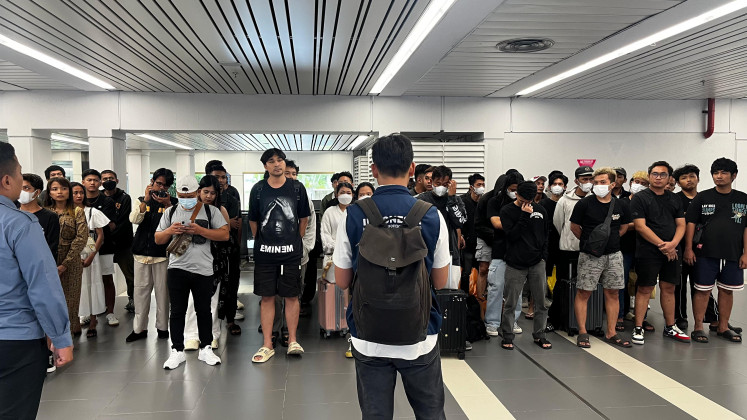
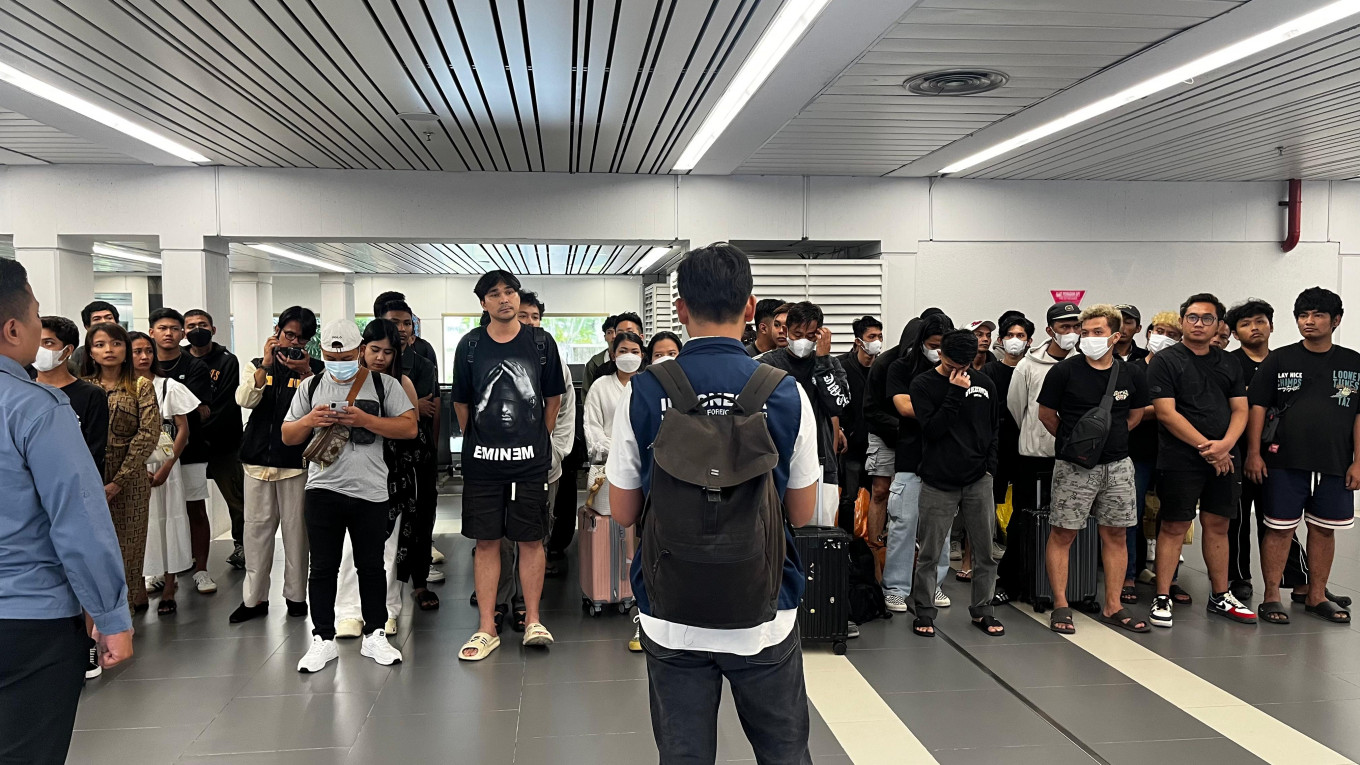 Indonesian nationals line up during questioning at Soekarno-Hatta International Airport in Tangerang, Banten on Sunday, Feb. 22, 2026, upon returning from Cambodia on commercial airliners. The largest group of returning citizens entangled in online scam operations in Cambodia undergo questioning by a joint team that includes law enforcement officers. (Courtesy of Indonesian Embassy in Phnom Penh/-)
I
n an era defined by rapid digitization, the promise of connectivity has brought nations closer, fueled economic growth, and fostered unprecedented regional integration. Yet, this digital dawn carries a dark silhouette.
Across Southeast Asia, a sophisticated and predatory crisis is unfolding in the shadows: the meteoric rise of online scam operations. Far from being mere financial fraud, online scamming has evolved into a severe transnational crime. It is an industry built on grave human rights violations, including human trafficking and forced labor, that inflicts far-reaching damage on economic development, regional cooperation, and public trust in governance.
For ASEAN, the stakes could not be higher. Just as certain regions of the world became historically synonymous with violent extremism, Southeast Asia risks being perceived globally as the epicenter of cyber-fraud and online scams. Such a reputation would deal a devastating blow to the region's hard-won prestige. If the international community begins to view Southeast Asia through the lens of cyber-insecurity, the long-term consequences will be severe, threatening tourism, deterring foreign direct investment, and derailing crucial security cooperation with global partners.
Furthermore, this crisis strikes at the very heart of the ASEAN community-building project. Regional integration relies inherently on the seamless and safe movement of people, goods, and capital. Online scams undermine the foundational trust required for these flows. When citizens fear that a job offer abroad is a trafficking trap, or when businesses worry that digital financial transactions are inherently compromised, the momentum toward a deeply integrated ASEAN grinds to a halt.
Beyond the realms of law and order or economic security, this issue poses a profound strategic threat. It directly erodes ASEAN centrality and diminishes the region's "convening power", its unique appeal as a trusted, neutral and secure hub for global diplomacy and commerce.
Here in Indonesia, there is a temptation to view this as a distant problem. Historically, the archipelago has been considered relatively safe from the worst of these syndicates. However, complacency is a luxury we cannot afford.

Indonesia's unique geography as an archipelagic nation, composed of thousands of islands, presents a distinct vulnerability. Without constant vigilance, these remote pockets could easily be exploited by criminal networks seeking new, hidden bases of operation.