TheJakartaPost
Please Update your browser
Your browser is out of date, and may not be compatible with our website. A list of the most popular web browsers can be found below.
Just click on the icons to get to the download page.


Popular Reads
Top Results
No results found. Please check your search term and try again
Can't find what you're looking for?
View all search results
Popular Reads
Top Results
No results found. Please check your search term and try again
Can't find what you're looking for?
View all search resultsStudent protests and the quiet militarization of the civilian sphere
When a peaceful student protest over fuel prices is met with 500 soldiers and hidden legal maneuvers, it signals a quiet, dangerous shift from democratic policing to increasing militarization.
Change text size
Gift Premium Articles
to Anyone
Share the best of The Jakarta Post with friends, family, or colleagues. As a subscriber, you can gift 3 to 5 articles each month that anyone can read—no subscription needed!
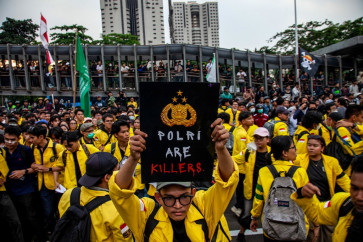
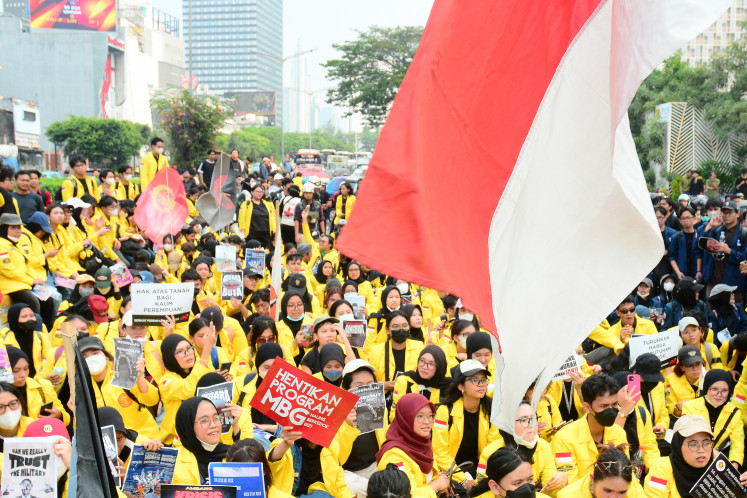
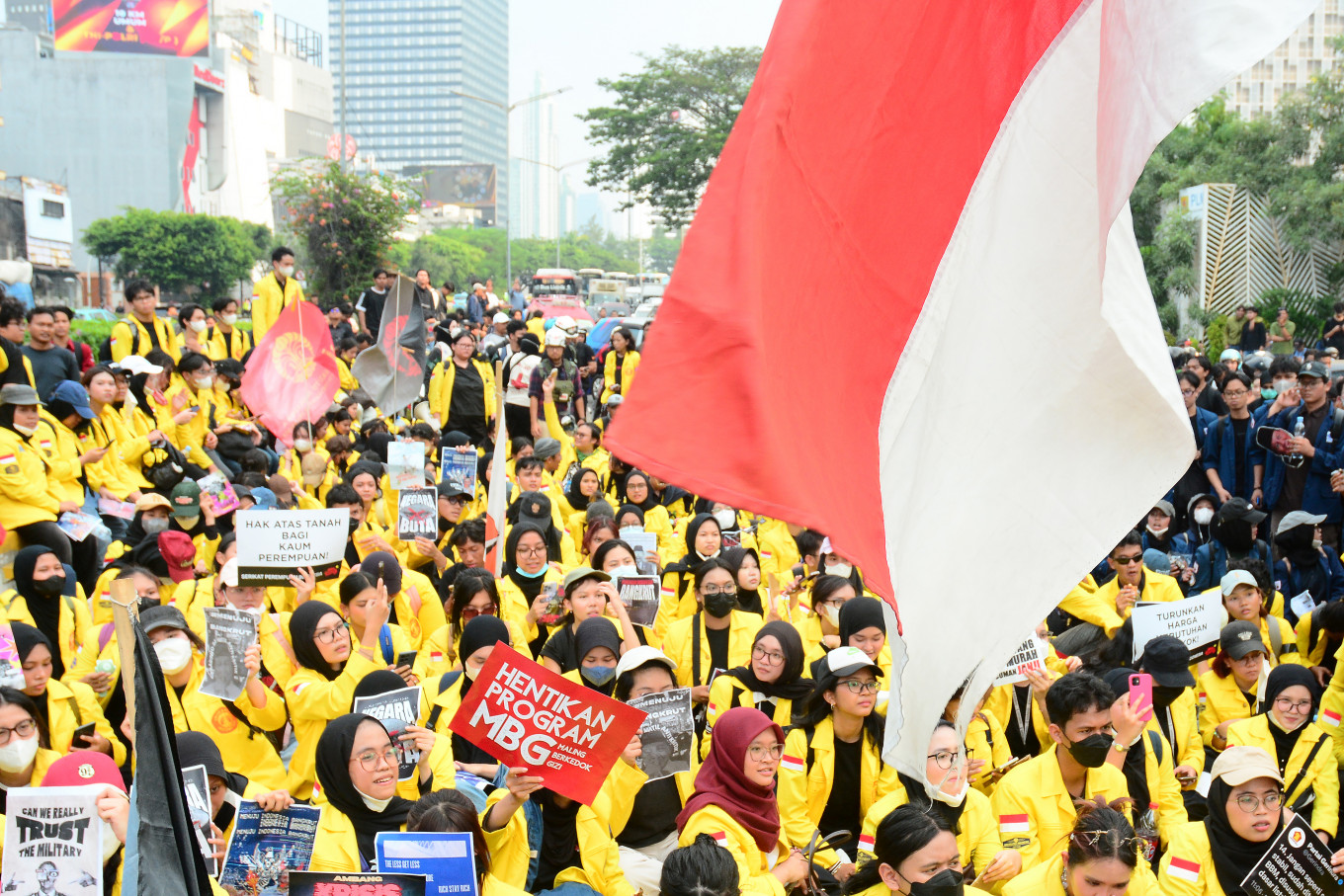 University students take part in a protest against government policies on Friday in Jakarta, Indonesia. Demonstrators criticized state budget spending, fuel prices, the government's free nutritious meal program and the expanded role of the military in civilian affairs. (JP/Iqro Rinaldi)
S
tudent movements always carry a double burden: students must speak for themselves while serving as a megaphone for those who cannot, or dare not, speak. Amid mounting economic pressure and a steadily narrowing public sphere, that voice grows more necessary even as it becomes harder to raise. The students are not a narrow interest group; they are proxies for a collective unease far wider than what is visible on the surface.
Within 48 hours of the nonsubsidized fuel price hike that took effect on June 10, demonstrations erupted at five locations across Indonesia. The wave began in Kendari, Southeast Sulawesi on the night of June 10, then spread to Bandung and peaked in Jakarta on June 12, when an alliance of the University of Indonesia and Greater Jakarta student bodies staged the "Toward a Bankrupt Indonesia" protest at 33 places.
Born in Kendari, far from the national spotlight, the first protest signaled that economic pressure is not merely an agenda manufactured by elite campuses, but a lived reality felt first in regions with the thinnest margins of economic resilience.
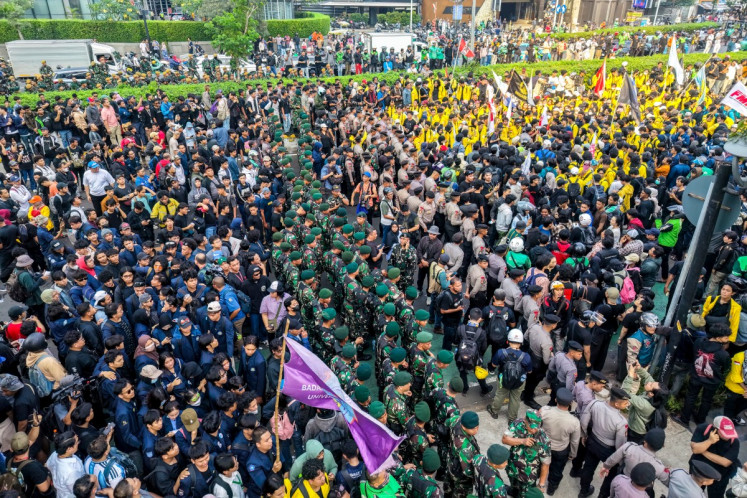
What unfolded in Jakarta, however, was not merely large crowds met by security personnel. Behind the more than 6,000 combined officers lined up from Semanggi cloverleaf to Thamrin Nine building lies a logic that warrants closer reading: a creeping militarization that arrives not by explicit proclamation, but through administrative mechanisms, circulars and the language of "assistance." This restriction operates in three distinct layers.
The first layer is the most visible. Five hundred camouflage-clad soldiers stood at the front of the cordon blocking students moving toward the Hotel Indonesia traffic circle. The military’s spokesperson classified this as "assistance to the police in accordance with the mechanism”. Procedurally, this may be true. But in democratic terms, that is precisely where the question begins: How often does such a "request" occur, and is the repetition of an emergency mechanism enough to turn it into the norm?
The second is subtler, and therefore more troubling. On June 11, the Defense Ministry issued a letter ordering roughly 500 members of the Reserve Component (Komcad), drawn from 42 ministries, to attend a roll call the following morning. The ministry denied any link to the demonstration, calling it a "routine readiness exercise", and indeed, no reserve personnel appeared in the field. Yet the Civil Society Coalition for Security Sector Reform raised a fundamental question: What is the legal basis of the mobilization?

Article 63(1) of Law No. 23/2019 on National Resources Management for National Defense states that mobilization may be ordered by the president only when the state faces an explicit defense threat. Under civil order, activating reserve defense instruments - even for an assembly - lacks adequate legal foundation. What threat did the state face that required summoning its reserve component?