TheJakartaPost
Please Update your browser
Your browser is out of date, and may not be compatible with our website. A list of the most popular web browsers can be found below.
Just click on the icons to get to the download page.


Popular Reads
Top Results
No results found. Please check your search term and try again
Can't find what you're looking for?
View all search results
Popular Reads
Top Results
No results found. Please check your search term and try again
Can't find what you're looking for?
View all search resultsRevisiting Indonesia’s fight against diabetes
To halt Indonesia’s skyrocketing diabetes crisis, we must stop treating communities as passive targets of health interventions and start engaging them as the ultimate cocreators of their own health solutions.
Change text size
Gift Premium Articles
to Anyone
Share the best of The Jakarta Post with friends, family, or colleagues. As a subscriber, you can gift 3 to 5 articles each month that anyone can read—no subscription needed!
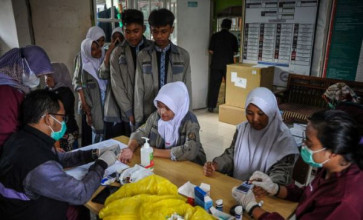
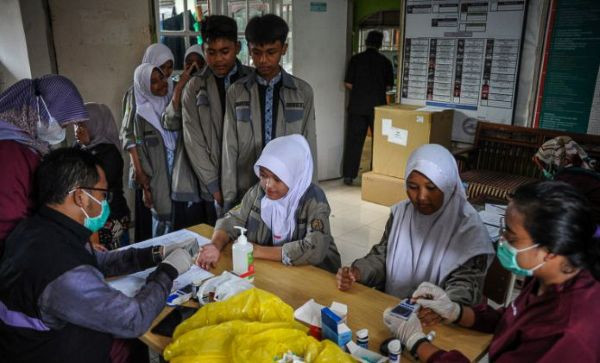 Health workers take blood samples from students on March 2, 2023, during a screening for noncommunicable diseases, including diabetes, at SMP 21 junior high school in Bandung, West Java. (Antara/Raisan Al Farisi)
I
ndonesia remains among the countries most heavily burdened by diabetes worldwide. According to the latest Diabetes Atlas published by the International Diabetes Federation, Indonesia ranked fifth globally in 2024, with an estimated 20.4 million adults aged 20-79 living with diabetes. This number is projected to rise to 28.6 million by 2050, when Indonesia is expected to remain among the world’s five most affected countries.
Even more alarming, the country ranked third globally in the proportion of undiagnosed diabetes cases in 2024, with approximately 73.2 percent of adults aged 20-79 living with diabetes unaware of their condition. This means millions of Indonesians may be living with diabetes silently, often without realizing it until serious complications emerge.
The consequences extend far beyond hospitals and clinics. Diabetes directly impacts productivity, mental well-being, household financial stability and the overall quality of life for millions of families.
A national study reported that 4 percent of the 18.9 million enrollees in Indonesia’s national health insurance were patients with type 2 diabetes, of whom 57 percent had already developed complications. Direct medical costs reached approximately US$576 million, with nearly three-quarters devoted to managing complications alone.
To its credit, Indonesia has undertaken sustained efforts to address this growing crisis. Government initiatives, such as the Free Health Check Program, expanded diabetes-related services through the Health Care and Social Security Agency (BPJS Kesehatan) and the Chronic Disease Management Program (Prolanis), as well as health promotion and education campaigns and research conducted by universities, NGOs and health professionals, have expanded substantially over the years.
Yet despite these efforts, the burden of type 2 diabetes continues to rise.

Part of the challenge may lay not in the absence of programs or policies but in how they are designed and implemented. Too often, health interventions are created for communities rather than with them. Health promotion and education efforts conducted in schools and through the Noncommunicable Diseases Integrated Development Post (Posbindu PTM) frequently arrive as top-down instructions instead of conversations built alongside the people they are intended to serve.