TheJakartaPost
Please Update your browser
Your browser is out of date, and may not be compatible with our website. A list of the most popular web browsers can be found below.
Just click on the icons to get to the download page.


Popular Reads
Top Results
No results found. Please check your search term and try again
Can't find what you're looking for?
View all search results
Popular Reads
Top Results
No results found. Please check your search term and try again
Can't find what you're looking for?
View all search resultsIdul Adha and Indonesia’s protein intake paradox
Indonesian households want to consume more animal-source foods but are systematically constrained by price, local availability and logistical bottlenecks.
Change text size
Gift Premium Articles
to Anyone
Share the best of The Jakarta Post with friends, family, or colleagues. As a subscriber, you can gift 3 to 5 articles each month that anyone can read—no subscription needed!
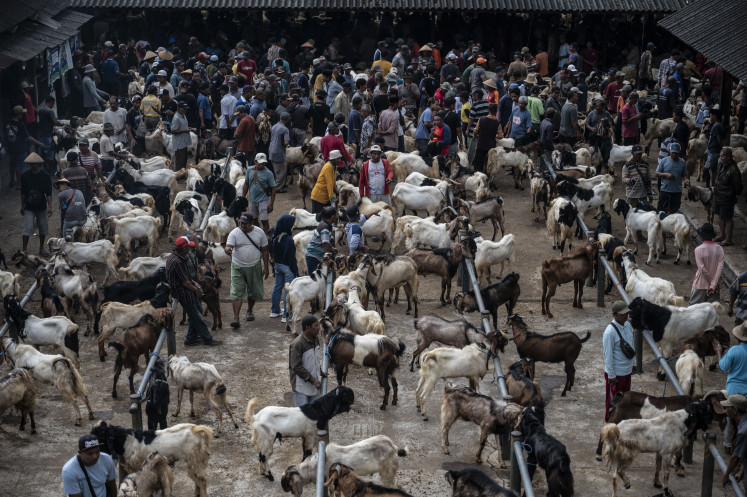
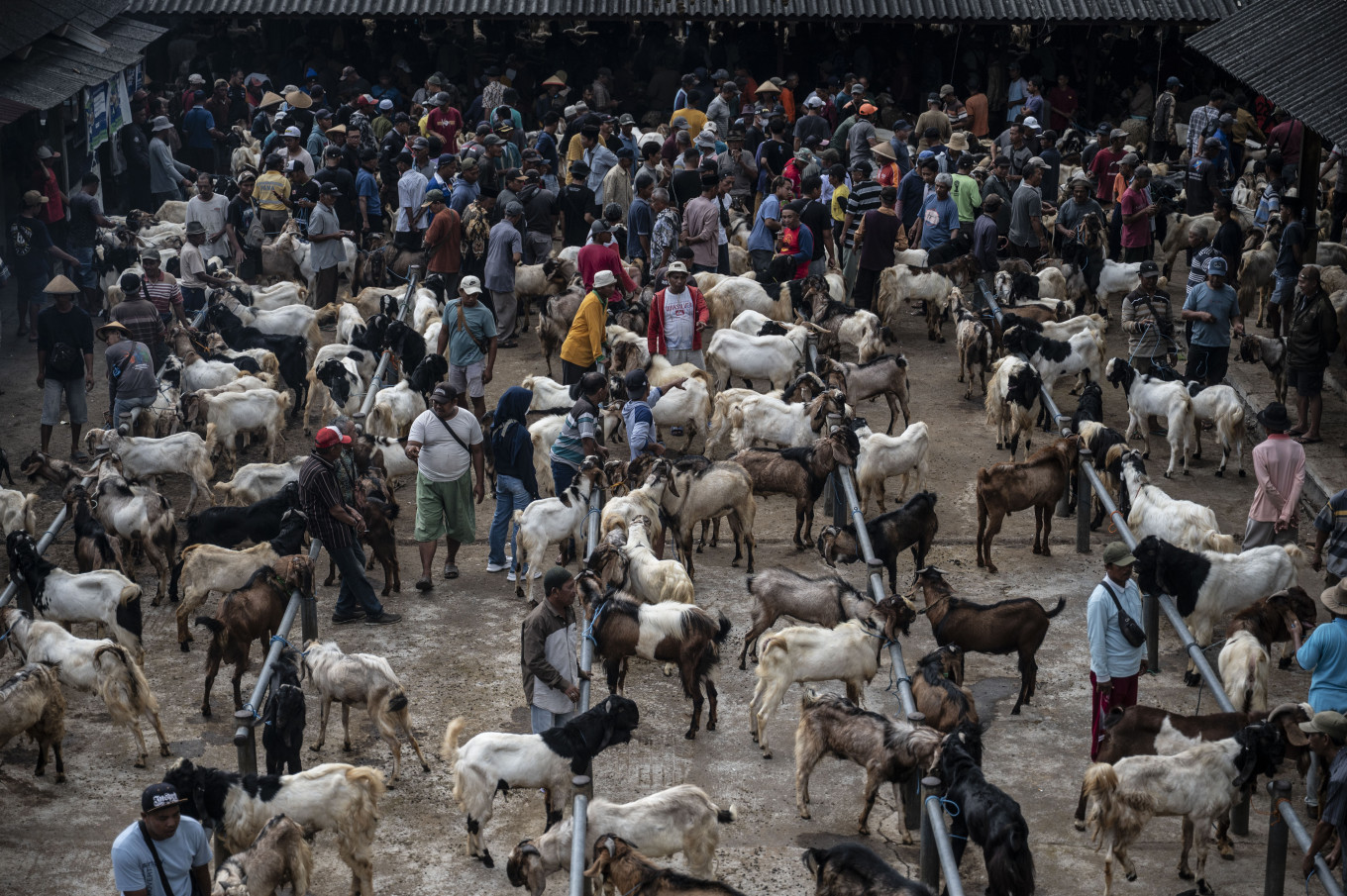 People buy and sell goats on May 21 at the Ambarawa Animal Market in Semarang regency, Central Java. Local authorities have tightened health inspections of livestock, particularly cattle, ahead of Idul Adha celebrations to ensure animals traded at the market are healthy and free from contagious diseases. (Antara/Aprillio Akbar)
I
dul Adha (the Islamic Day of Sacrifice), which falls tomorrow, is more than just a sacred religious occasion in Muslim-majority Indonesia; it also exposes a striking food paradox. For a few days, meat becomes widely available in millions of households. Yet, for the rest of the year, it remains an expensive luxury for many families.
While there is no definitive data tracking exactly how much meat consumption spikes during Idul Adha—as measuring dietary shifts over such a short window is notoriously difficult—the sheer volume of sacrificial animals slaughtered offers a clear window into the scale of the phenomenon.
During Idul Adha and the three days of Tashreeq this year, an estimated 2 million sacrificial animals were slaughtered across Indonesia. Last year, the Religious Affairs Ministry recorded 1,856,962 sacrificial animals, consisting of 627,130 cattle and buffaloes, and 1,229,832 goats and sheep.
To put this in perspective, the number of cattle and buffaloes slaughtered during this single holiday period was equivalent to roughly 65 percent of all cattle and buffaloes processed in official slaughterhouses nationwide throughout the entirety of 2025. For goats and sheep, the contrast was even more staggering, reaching approximately 740 percent of the annual number slaughtered through official facilities.
On one hand, this seasonal surge is encouraging. Idul Adha temporarily democratizes access to high-quality animal protein that economic constraints or uneven supply chains otherwise block. For vulnerable households, meat that is usually financially out of reach suddenly arrives at no cost. On the other hand, this fleeting abundance masks the deeper structural realities of Indonesian nutrition. This short-term dietary shift does not translate into a sustained, population-wide baseline of protein intake.
This disconnect becomes clear when looking at broader national health metrics. The government recommends a daily nutritional adequacy level of 2,100 kilocalories and 57 grams of protein per capita. According to the March 2025 National Socioeconomic Survey, average consumption patterns look healthy on paper: Average calorie intake reached 2,073 kilocalories, while average protein consumption stood at 62.78 g per capita per day.

At first glance, national protein intake comfortably exceeds the recommended baseline. However, this average hides severe regional disparities. Several provinces in Maluku and Papua still record average protein consumption well below the 57-g threshold. Furthermore, even where intake is high, Indonesia's average remains far below the global average of 92.15 g per capita per day (as of 2023). Neighboring Malaysia, by comparison, has already surpassed that global benchmark at 93.33 g.