TheJakartaPost
Please Update your browser
Your browser is out of date, and may not be compatible with our website. A list of the most popular web browsers can be found below.
Just click on the icons to get to the download page.


Popular Reads
Top Results
No results found. Please check your search term and try again
Can't find what you're looking for?
View all search results
Popular Reads
Top Results
No results found. Please check your search term and try again
Can't find what you're looking for?
View all search resultsStop building schools for the poor. Start fixing education for all
Establishing separate schools for poor children doesn't break the cycle of poverty, but rather institutionalizes it. Indonesia must move beyond charity schooling and commit to a single, high-quality education system that treats every child as a full participant in the nation's future.
Change text size
Gift Premium Articles
to Anyone
Share the best of The Jakarta Post with friends, family, or colleagues. As a subscriber, you can gift 3 to 5 articles each month that anyone can read—no subscription needed!
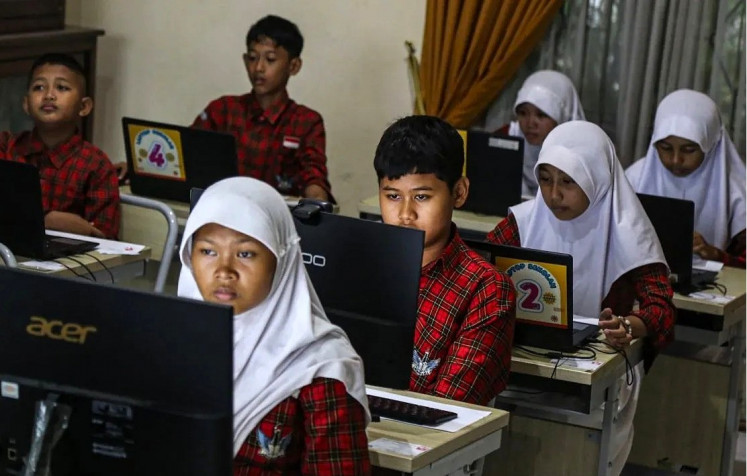
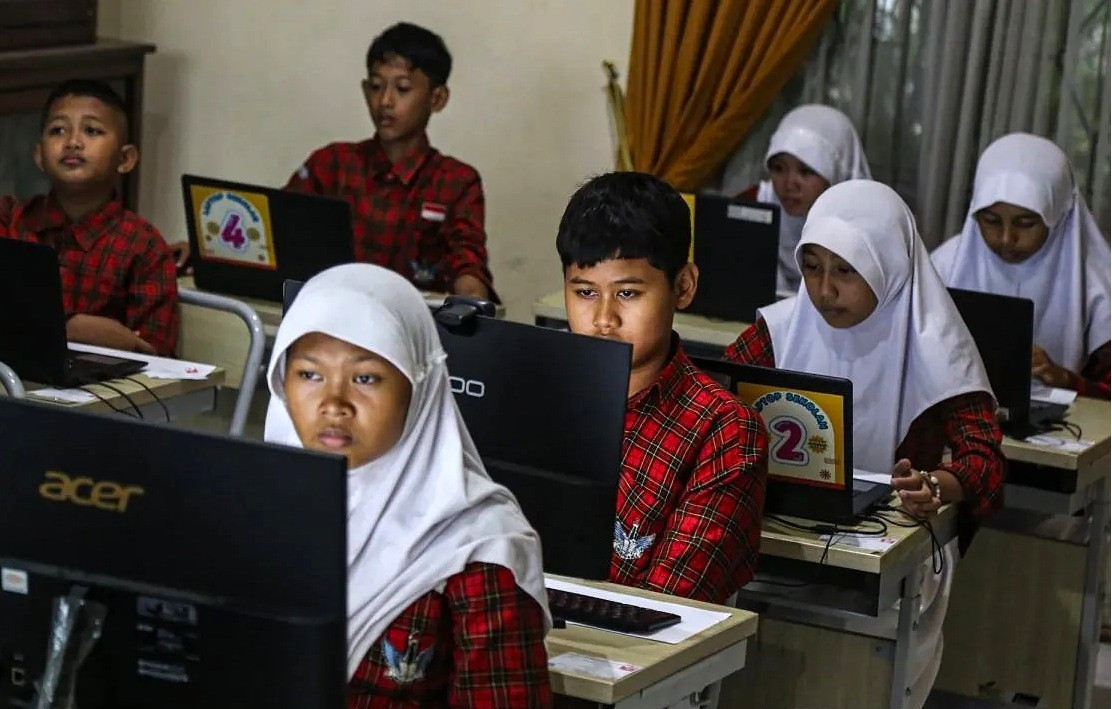 Tech-based test: Students stay focused on their mathematics exams during the inaugural National Academic Competency Test (TKA) at Kalicari 3 state elementary school in Semarang, Central Java, on April 22, 2026. The computer-based assessment is part of a standardized national program conducted simultaneously across the country. (Antara/Makna Zaezar)
N
ational Education Day is meant to remind us that education is not charity; it is nation building. It is the vehicle through which a country expands opportunity, develops talent and prepares its young people to participate fully in society. That is precisely why Indonesia must look carefully at the promise now attached to Sekolah Rakyat (community schools).
The program has been promoted as a bold strategy to break the cycle of poverty. It is easy to understand why this message resonates. Too many Indonesian children are still growing up with limited access to high-quality education, especially those from families facing deep economic hardship. Any government initiative that seeks to support these children deserves serious attention.
But good intentions are not enough. If Sekolah Rakyat is to be more than a political symbol, we need to ask a harder question: Is Indonesia tackling poverty through education or merely relocating poor children into a separate system and calling it reform?
As an educator and researcher who has worked with teachers in Indonesia and internationally, I find that question difficult to ignore. In every context, one lesson keeps returning: Poverty is not solved simply by opening school doors, nor is educational inequality solved by creating a special pathway for the poor and assuming that access alone will do the work of justice.
Children do not escape poverty simply because they sit in classrooms. They are more likely to escape when they experience excellent teaching, strong support, meaningful learning and real pathways into further study, employment and civic life. That is a much harder task than launching a new program.
This is where the public conversation about Sekolah Rakyat has been too simplistic. The policy is being framed as though schooling alone is enough to disrupt intergenerational poverty. It is not.

Poverty is not only about school attendance. It is tied to health, nutrition, family insecurity, housing, transport, digital access, community resources and the quality of schools that children attend. If these conditions are not addressed together, education policy risks becoming a performance of compassion rather than a strategy for transformation.