TheJakartaPost
Please Update your browser
Your browser is out of date, and may not be compatible with our website. A list of the most popular web browsers can be found below.
Just click on the icons to get to the download page.


Popular Reads
Top Results
No results found. Please check your search term and try again
Can't find what you're looking for?
View all search results
Popular Reads
Top Results
No results found. Please check your search term and try again
Can't find what you're looking for?
View all search resultsHigh transboundary haze risk puts Indonesian policy to test: Report
A Singapore-based think-tank assessing transboundary haze from forest fires issued a rare “code red” warning on Wednesday, flagging a risk for severe regional haze between August and September and urging Indonesia to step up mitigation efforts ahead of the warming El Nino weather phenomenon.
Change text size
Gift Premium Articles
to Anyone
Share the best of The Jakarta Post with friends, family, or colleagues. As a subscriber, you can gift 3 to 5 articles each month that anyone can read—no subscription needed!
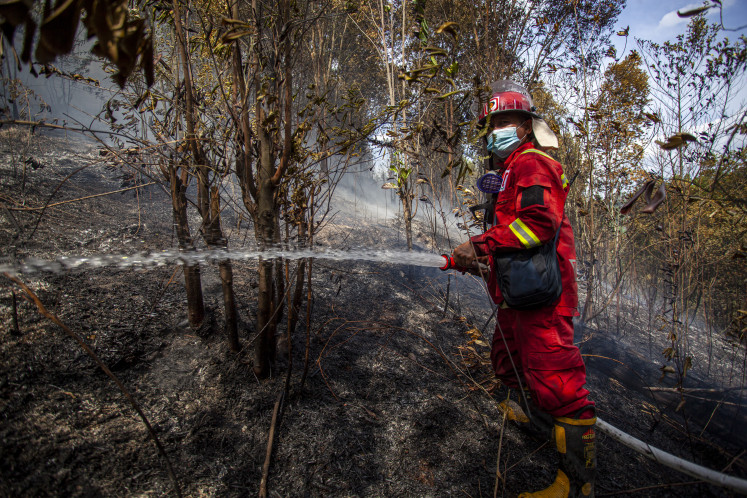
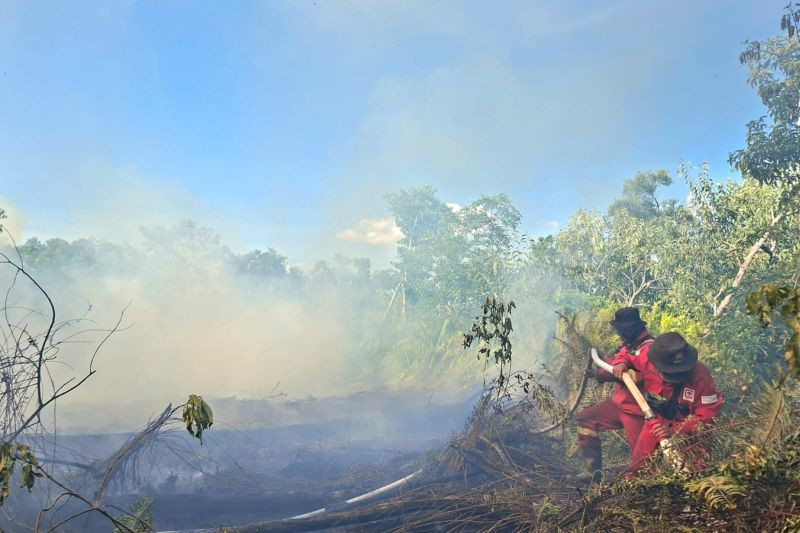 Haze of despair: This undated photo released by Antara on March 16 shows Manggala Agni firefighters attempting to extinguish a forest fire in Pelalawan regency, Riau province. (Antara/Manggala Agni/Handout)
A
Singapore-based think-tank assessing transboundary haze from forest fires issued a rare “code red” warning on Wednesday, flagging a risk for severe regional haze between August and September and urging Indonesia to step up mitigation efforts ahead of the peak of warming weather phenomenon El Nino.
In a 15-page report, the Singapore Institute of International Affairs (SIIA) said Indonesia, Malaysia, Singapore and Brunei are in the potential path of haze, citing a convergence of hotter, drier conditions, stretched enforcement and rising agricultural costs that could increase the use of fire for land clearing.
While the past two years saw lower haze risks due to La Nina bringing heavier rainfall, the report said the remaining months of 2026 could potentially be “one of the hottest and driest dry seasons on record”, driven by El Nino and another warming climate phenomenon called the positive Indian Ocean Dipole.

Against this backdrop, the report said efforts from the government and the private sector will be even more crucial this year to keep fires and haze under control, particularly in Indonesia, whose vast plantation areas make it central to the region’s haze risks.
“The last few episodes [of haze] have tended to be from Indonesia. Of course, this is logical as it is a much larger country [and as] a resource-based country with a strong record of producing palm oil,” SIIA chairman Simon Tay said in a briefing on Wednesday.
While acknowledging Indonesia’s efforts to curb transboundary haze in recent years, including stricter enforcement against illegal burning, Tay noted that this year, rising costs of fertilizer and fuel caused by the Middle East war could lead to clearing land by burning as farmers try to cut costs.