TheJakartaPost
Please Update your browser
Your browser is out of date, and may not be compatible with our website. A list of the most popular web browsers can be found below.
Just click on the icons to get to the download page.


Popular Reads
Top Results
No results found. Please check your search term and try again
Can't find what you're looking for?
View all search results
Popular Reads
Top Results
No results found. Please check your search term and try again
Can't find what you're looking for?
View all search resultsMultidisciplinary care gains ground in Indonesia's cancer treatment
As cancer cases climb in Indonesia, hospitals are increasingly combining genetic testing with multidisciplinary teams of specialists to speed up diagnoses, tailor treatments and improve patient outcomes.
Change text size
Gift Premium Articles
to Anyone
Share the best of The Jakarta Post with friends, family, or colleagues. As a subscriber, you can gift 3 to 5 articles each month that anyone can read—no subscription needed!
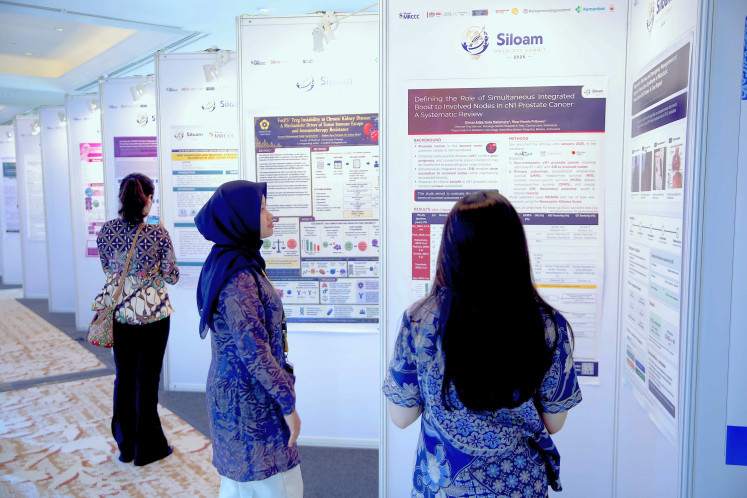
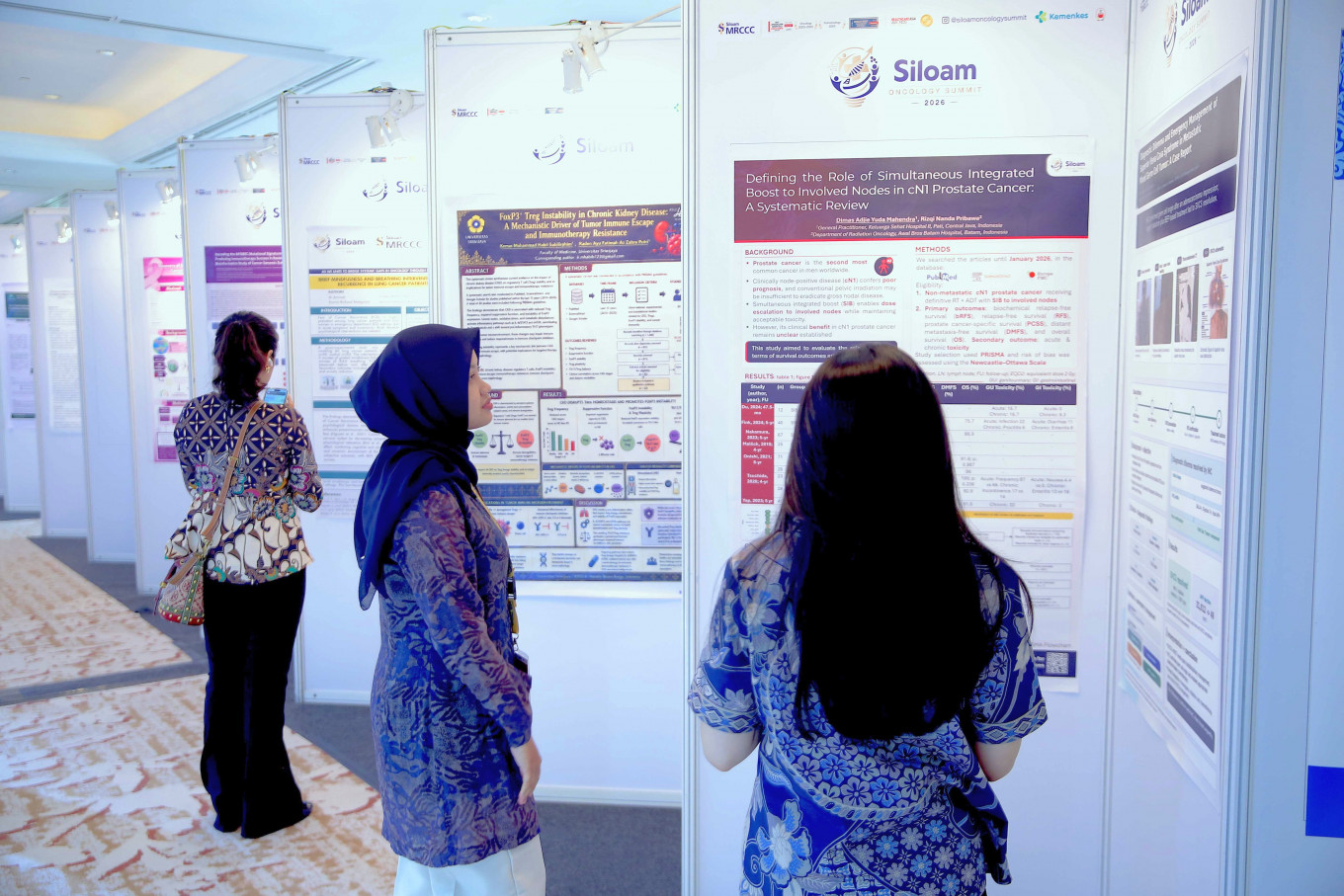 Shared mission: Participants view scientific posters during the 6th Siloam Oncology Summit 2026 in Jakarta on May 23, 2026. The event brought together oncologists, researchers and healthcare professionals to discuss advances in cancer treatment, including precision medicine and multidisciplinary care. (Courtesy of Siloam International Hospitals/-)
A
mid a growing cancer burden in Indonesia, doctors are increasingly turning to multidisciplinary teams and genetic testing to tailor treatment plans, marking a shift away from the traditional model in which individual physicians make decisions in isolation.
According to the World Health Organization (WHO), cancer caused nearly 10 million deaths worldwide in 2020, making it one of the leading causes of death globally, with lung, breast, colorectal and prostate cancers among the most common types.
Recent Health Ministry data shows around 400,000 new cancer cases are detected annually in the country, with deaths reaching approximately 240,000 each year. Without stronger prevention and early detection, the country's cancer burden is projected to rise by more than 70 percent by 2050.

In Jakarta alone, the city’s health agency recorded more than 625,000 outpatients and nearly 110,000 inpatient cancer visits in 2025, with deaths in the capital rising by 33 percent from last year.
To tackle such cases, doctors begin with genetic testing to identify specific tumor mutations.
“Doctors examine the tumor’s genetic expression first to determine which treatment is most suitable," said Adityawati Ganggaiswari, director of Mochtar Riady Comprehensive Cancer Center (MRCCC) Siloam Hospitals, during the 6th Siloam Oncology Summit 2026 in late May at Shangri-La Hotel in Central Jakarta.
These findings are then brought to a multidisciplinary team (MDT), comprising specialists from various fields who will jointly review patient cases before any treatment begins.



More from The Weekender

Success isn’t at the top of the corporate ladder anymore
My generation watched our parents give everything to a company. We decided to give it to ourselves instead. But it's more complicated than that.

Our second Instagram account is the real one
In an act of rebellion against overexposure and performative social media, Gen Z are turning to smaller, controlled spaces on social media where they can be their authentic selves.

What women want, and the gap men are still trying to close
While millennial and Gen Z women were raised to chase careers, the same generation of men were not taught to do chores or be vulnerable. How can men step up?